Seven questions to ask a designer before you hire them
Portfolios show finished work, which is the least useful thing about a designer. These seven questions get at what they actually do, with the answers worth hearing and the ones that should worry you.
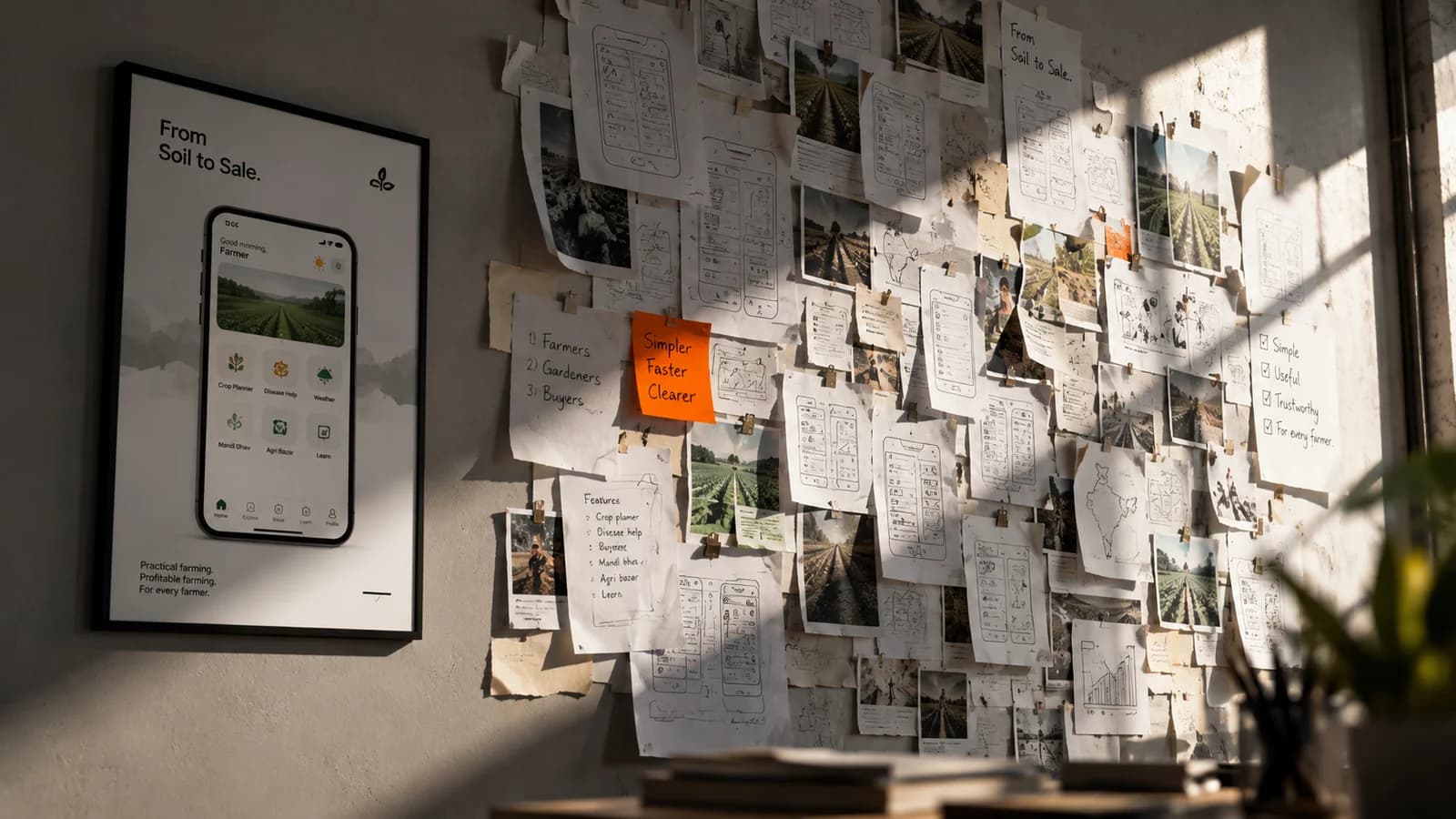
A portfolio shows you the end. It has been chosen, cropped and captioned, and it tells you almost nothing about what it is like to work with the person who made it.
These are the questions I would ask. I have included the answers that should reassure you and the ones that should not, including where the bad answer is one I have given myself.
1. What did you get wrong on this project?
You want a specific thing, and what it cost. "The annotation cards took eleven passes because I tried to solve it myself before checking how anyone else had." That is a person who watches their own work.
Worry if the answer is a non-failure dressed up. "I care too much about detail." "The client was difficult." Somebody with four years of real projects and no mistakes is either not looking or not telling you.
2. What did you decide not to do, and why?
You want rejected options with reasons. Good design is mostly choosing, and somebody who can name what they ruled out was choosing rather than executing.
Worry if every decision sounds inevitable. Work that could only ever have been done one way usually means nobody considered a second way.
3. Show me something that is not in your portfolio
You want the messy middle. Sketches, a half-built prototype, the version that did not work.
Worry if there is nothing. Either they do not keep it, which makes the polished work harder to trust, or the polished work came from somewhere else.
4. What will I have when you leave?
You want a real answer about where the reasoning lives. Files are the easy part. Ask what happens to the why: a written spec, a decision log, a prototype engineers can check against.
Worry if the answer is "a Figma file". You will have pictures of a product and nobody who remembers why anything is where it is.
5. How do you know when something is wrong?
You want a method. Measuring, testing, watching someone use it, a checklist they actually run.
Worry if the answer is entirely about taste. Taste is real and it is not a substitute for checking. Things I have only ever caught by measuring: a divider at 1.15:1 contrast, an icon 4 pixels out of family, a grid cell wrapping into a column nobody could see.
6. What do you need from me, and by when?
You want them to have thought about your side of it. Decisions, access to users, someone to approve things, a rhythm for reviews.
Worry if they say "nothing, just leave it with me". Design goes wrong quietly when the designer stops asking questions, and a designer who needs nothing from you has stopped already.
7. When is the answer not to hire you?
You want a straight answer. Every good designer knows the shape of project they are wrong for. Mine: if you need design decisions made every week for the next two years, you need somebody inside, not me.
Worry if they are right for everything. Nobody is right for everything, and somebody who says otherwise is selling rather than assessing.
What the answers are really telling you
Every one of these is the same question underneath: does this person think, or do they execute?
Executing is not worthless. If you know exactly what you want built, an executor is cheaper and faster. But if you are not certain the thing you are asking for is the thing you need, you want somebody who will say so, and all seven questions are ways of finding out whether they will.
There is a version of this worth doing on yourself too. If you cannot answer "what is going wrong and for whom" in plain words, that is the first piece of work, and the right designer will tell you that rather than quoting for the thing you asked for.
If you would like to put these to me, start here.