A mirror that clears its own fog
You shower, the mirror fogs, and you wipe it with your hand before you can shave. A self-directed product study that went from interviews through to a working concept, and changed its own interview method halfway through.
- Self-directed
- User research, product design, prototyping
- 10 September 2024
- 6 min
Everyone who has had a shower knows this one. The mirror fogs, you wipe it with the side of your hand, it smears, and by the time you have finished shaving it has fogged again.
It is a small problem, which is exactly why it is a good one to study. Nobody complains about it loudly enough to get it fixed, and everybody works around it every morning.
Where I started
I picked the bathroom as a space, then went looking for what actually goes wrong in it. Secondary research first, then interviews.
The interviews did not work at first, and fixing that was the most useful thing I did.
I started by asking directly: what problems do you have with your bathroom mirror fogging? The answers were thin. People said it was fine, or a bit annoying, and moved on. Asking someone to name a problem assumes they have already decided it is one.
So I changed the question to what they do: what happens when the mirror fogs up after a shower? The answers changed completely. People described wiping it with a towel, waiting, opening a window, running the tap hot. Nobody had called any of that a problem, and all of it was the problem.
Five interviews in, the same two things kept appearing: time lost wiping the mirror every morning, and the frustration of having to do it again a minute later.
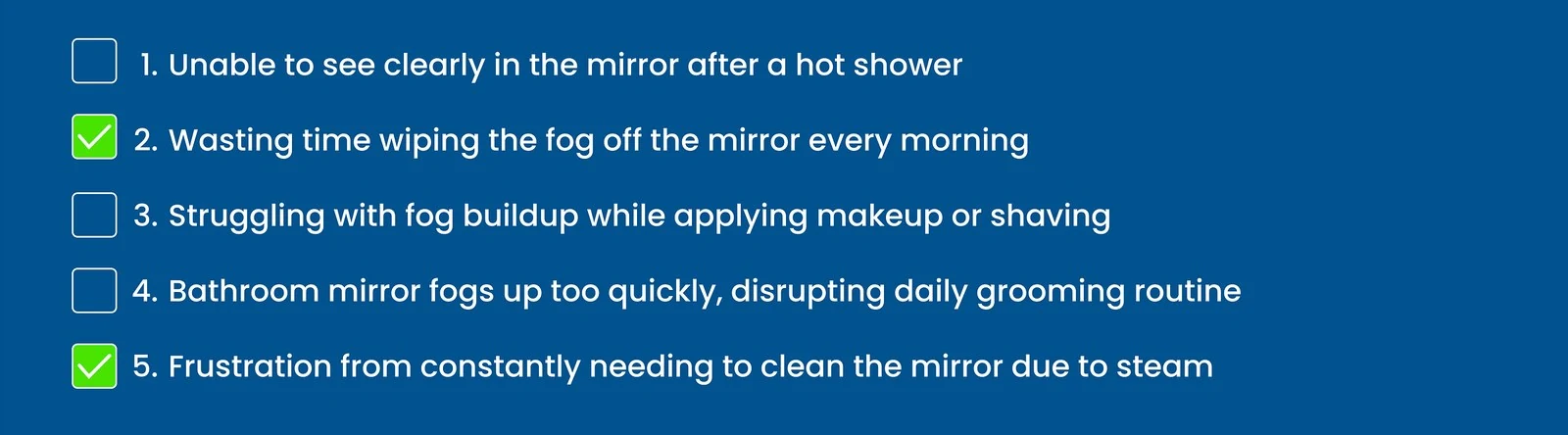
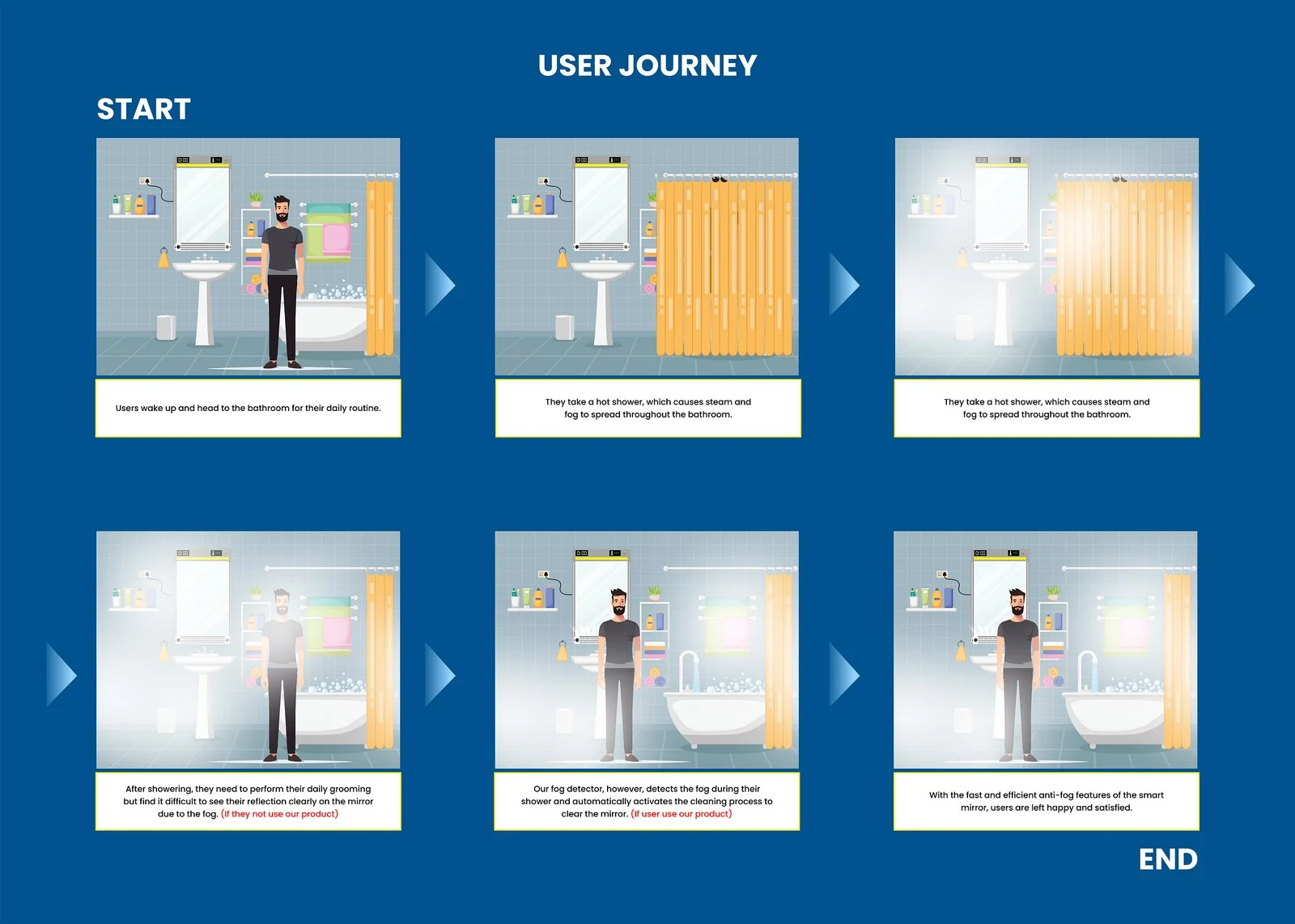
Mapping the journey from shower to grooming showed where the gaps were, and that the fogging was not one event but a state that kept coming back through the whole routine.
Choosing what to build
I used Crazy 8 to get past the first few obvious answers.
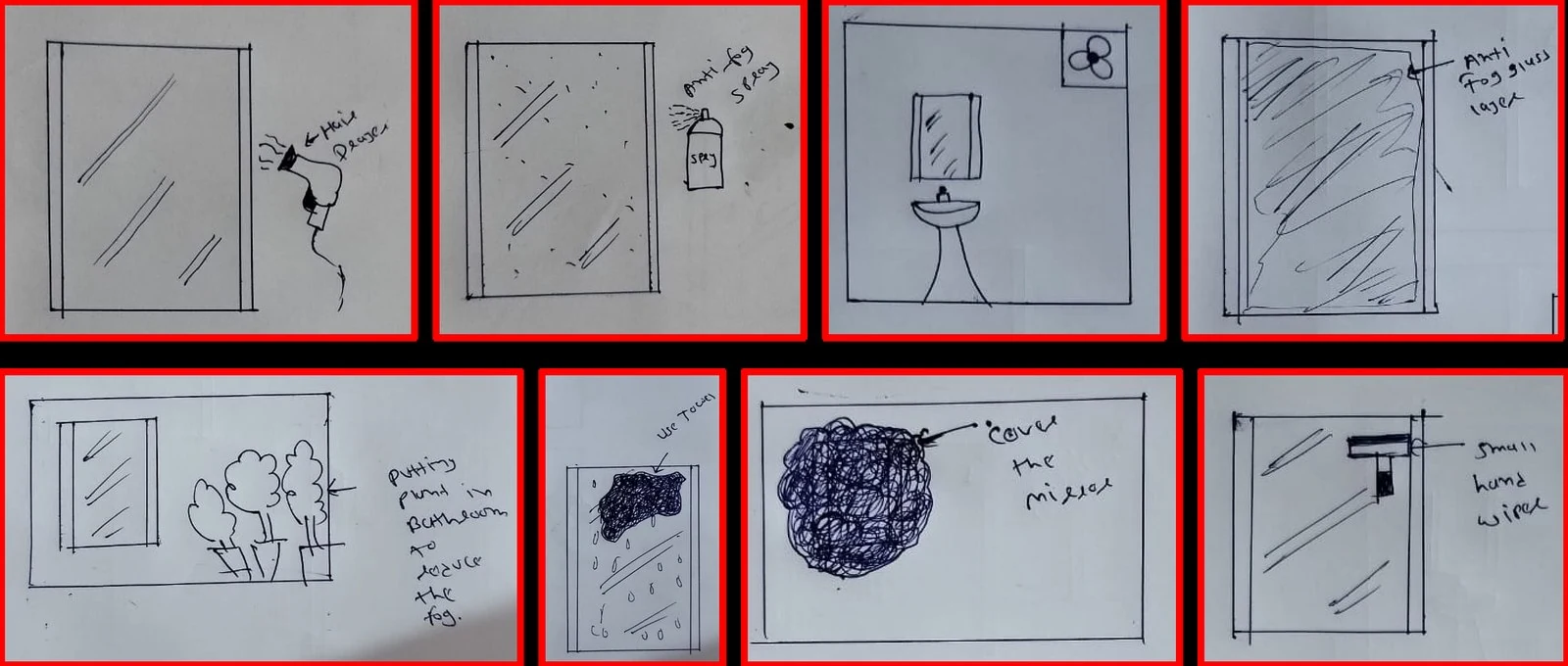
The early ideas were the ones anyone would reach for: wipe it by hand, use an anti-fog spray, fit an exhaust fan, use a hairdryer. Each one either keeps the chore or moves it somewhere else. A spray needs reapplying. A fan needs the room to have one. A hairdryer means holding an appliance while you are wet.
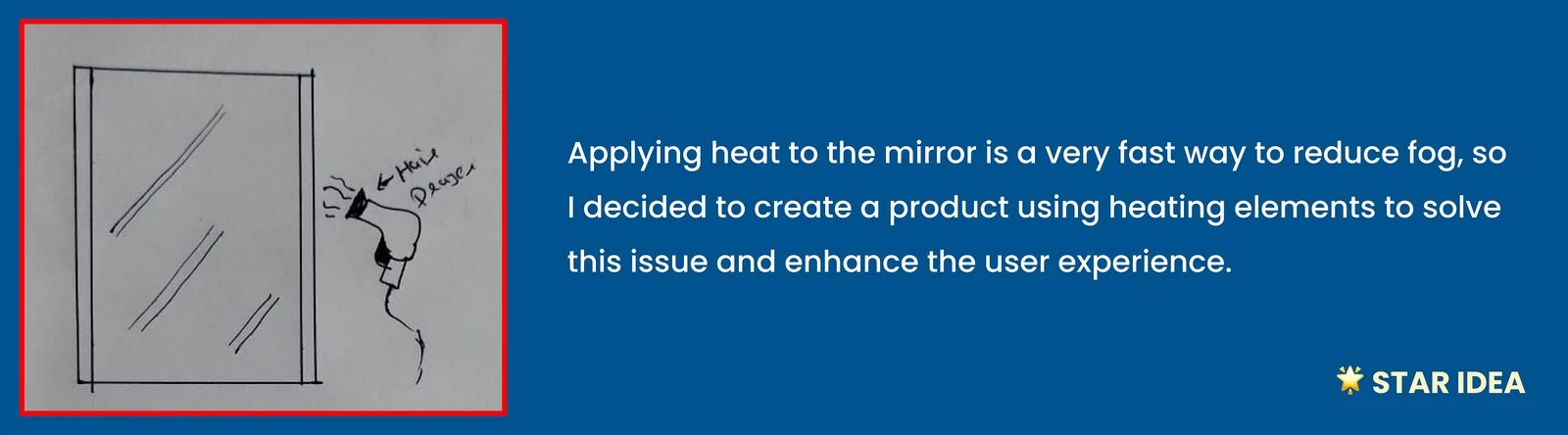
What made the smart mirror worth building was that it removes the task rather than speeding it up. Nothing to remember, nothing to hold, nothing to reapply.
The decision that changed the product
My first prototype had a button. You press it, the defogger runs.
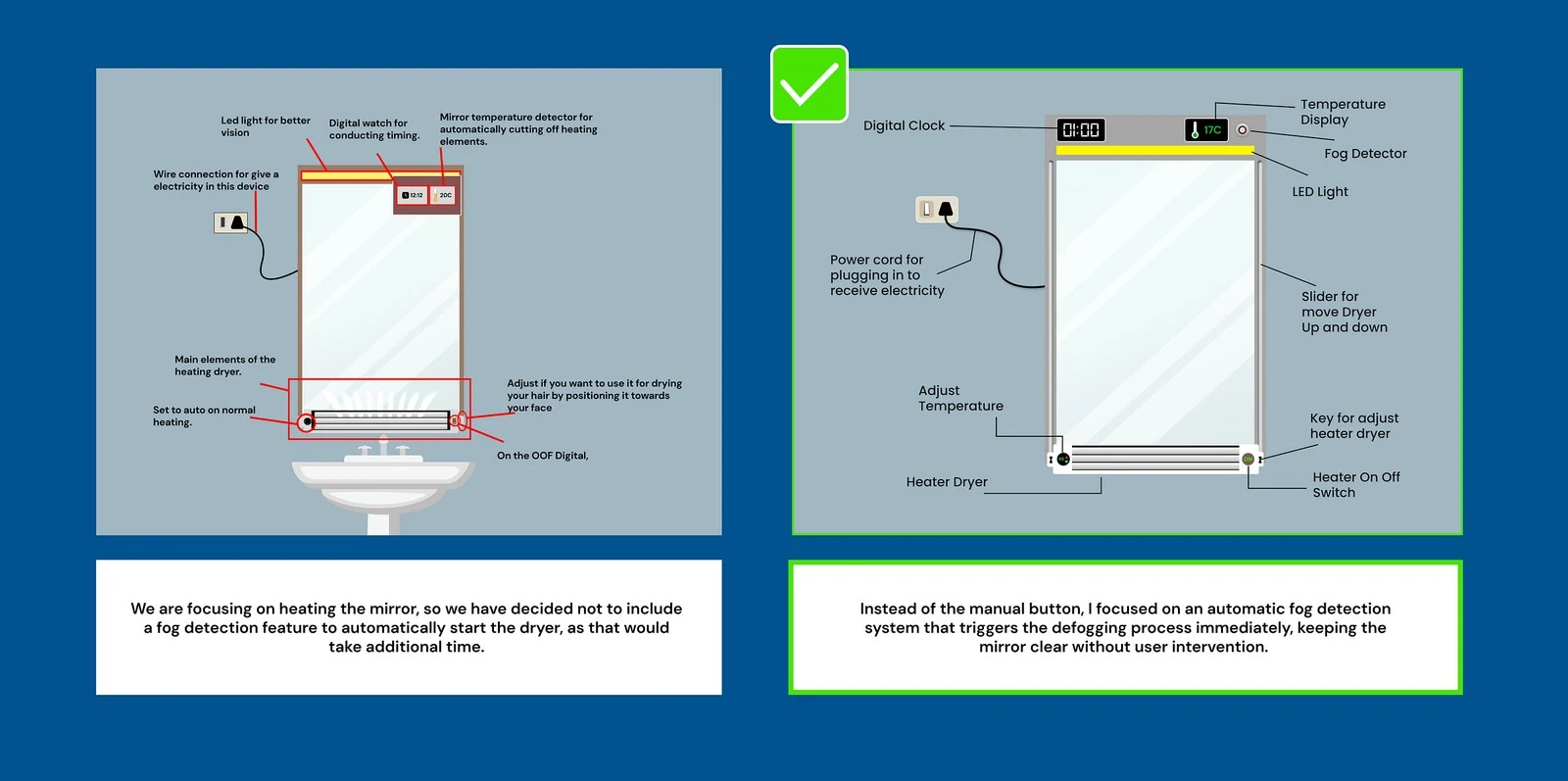
Testing it with peers made the flaw obvious. A button means noticing the fog, being wet, and reaching for a control before you can use the mirror. It is a smaller chore than wiping, and it is still a chore.
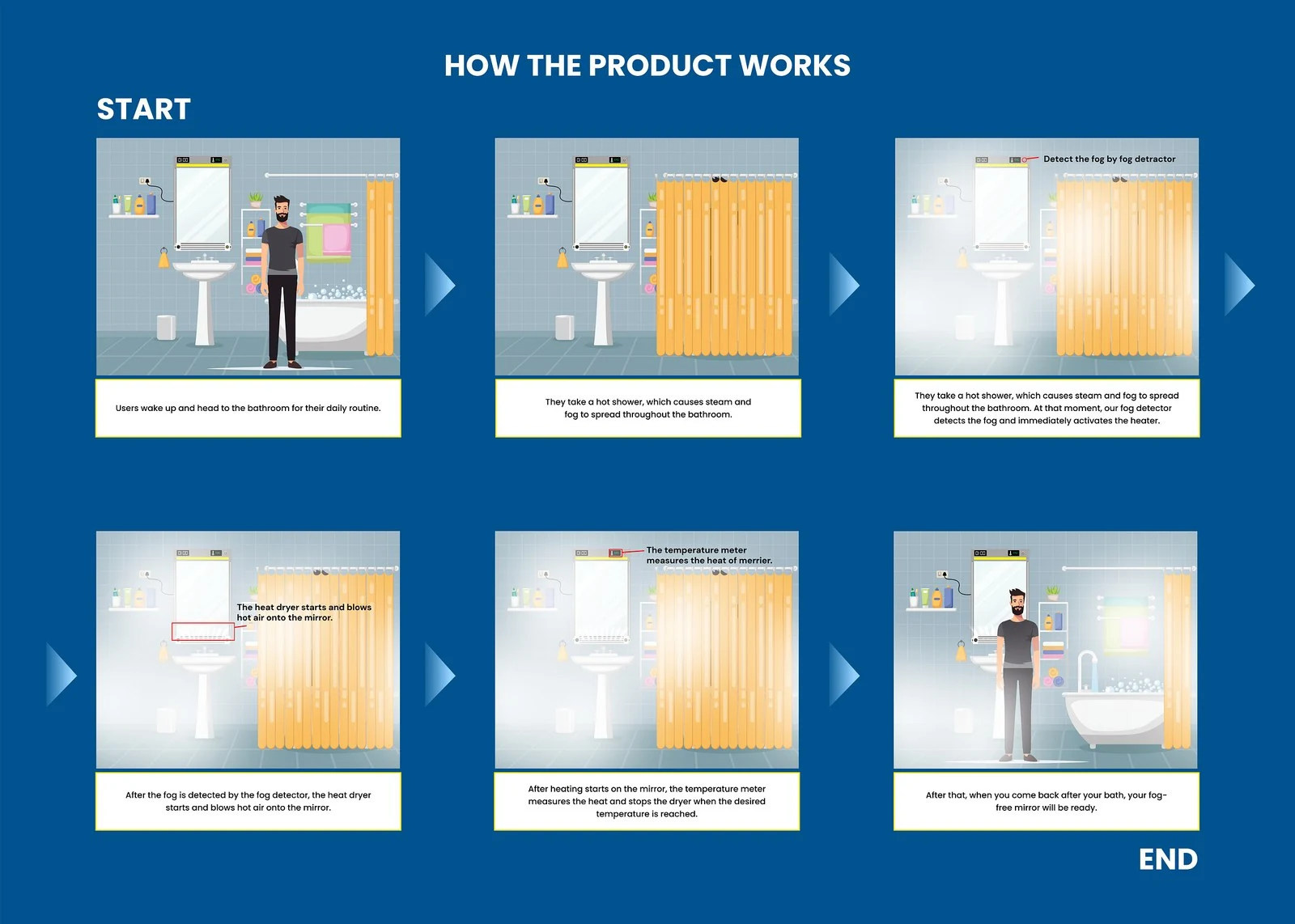
So the mirror detects the fog itself and clears it without being asked.
One piece of peer feedback changed it again: what if someone wants it to keep going for longer? Automatic is right until it stops before you have finished. So a timer lets you extend it. I also stripped the control panel back, because every button I had added was a decision I was handing to someone standing in a towel.
The product
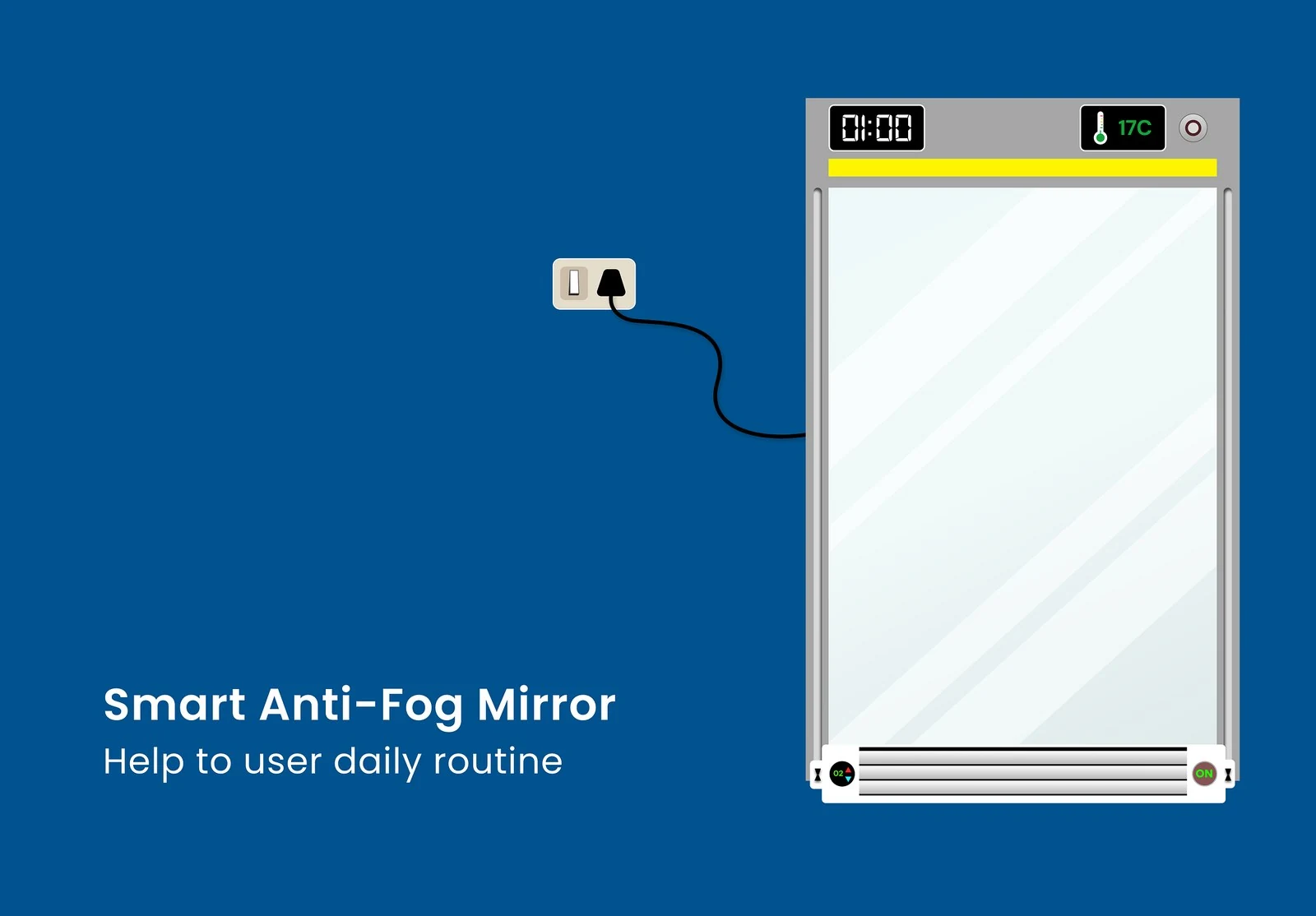
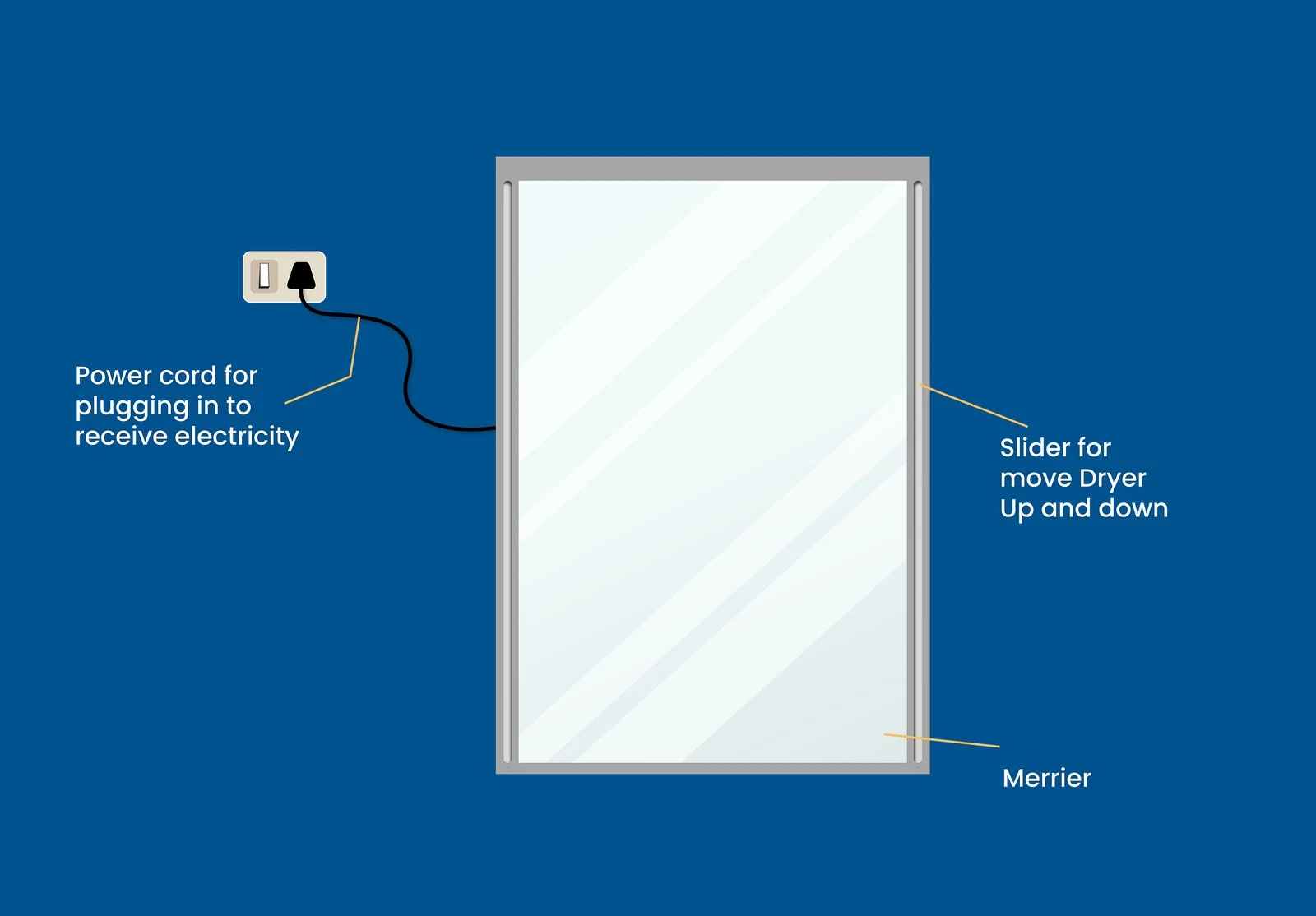
It runs on mains power and carries a fog detector, a heater that clears the glass, a light, a temperature readout and a clock.
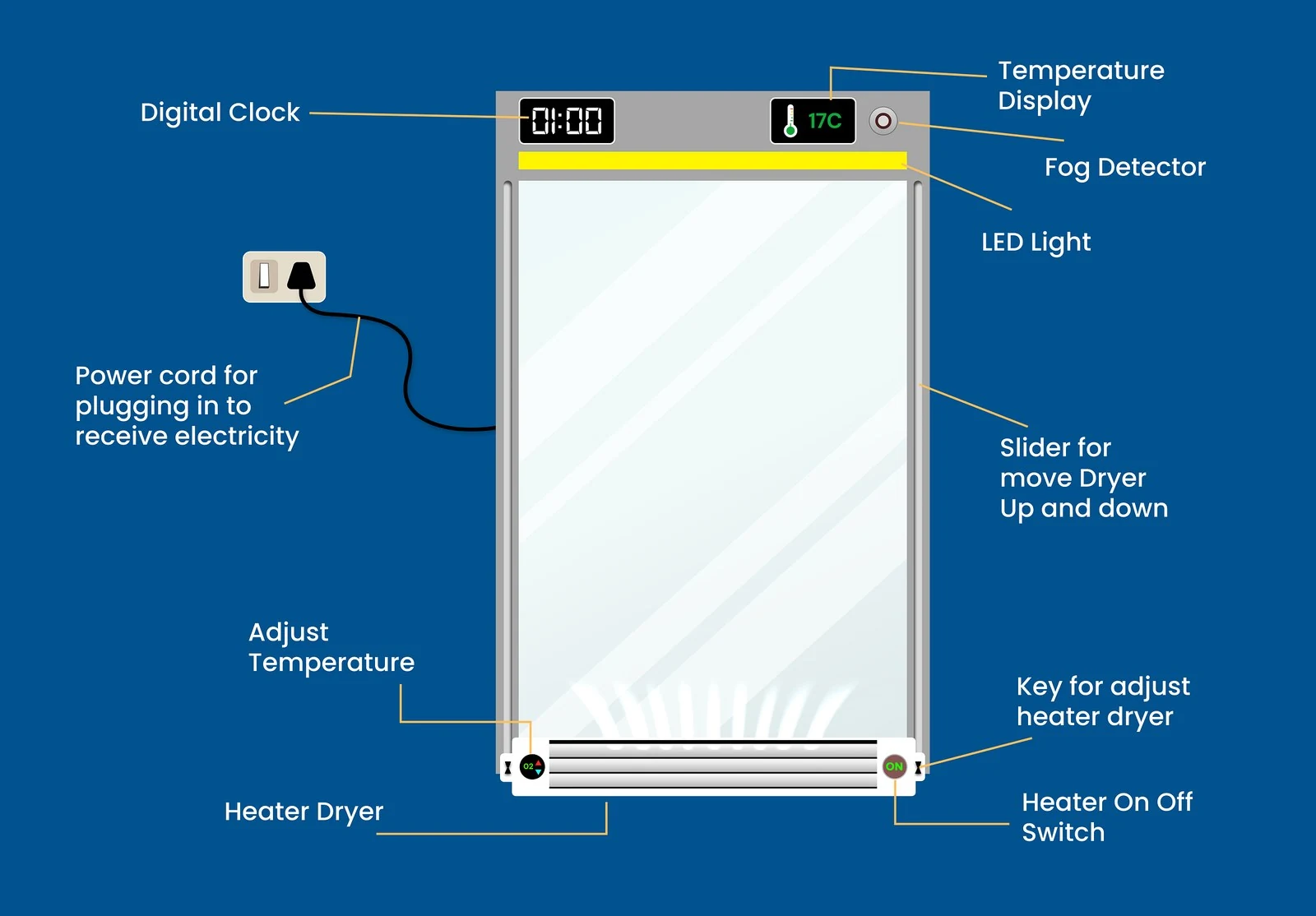
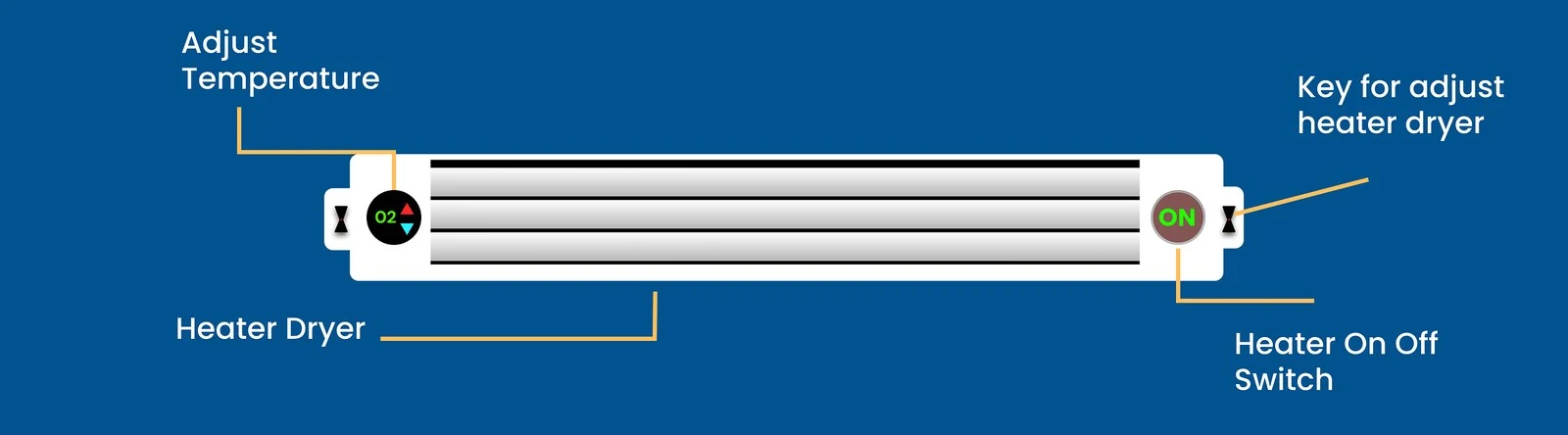
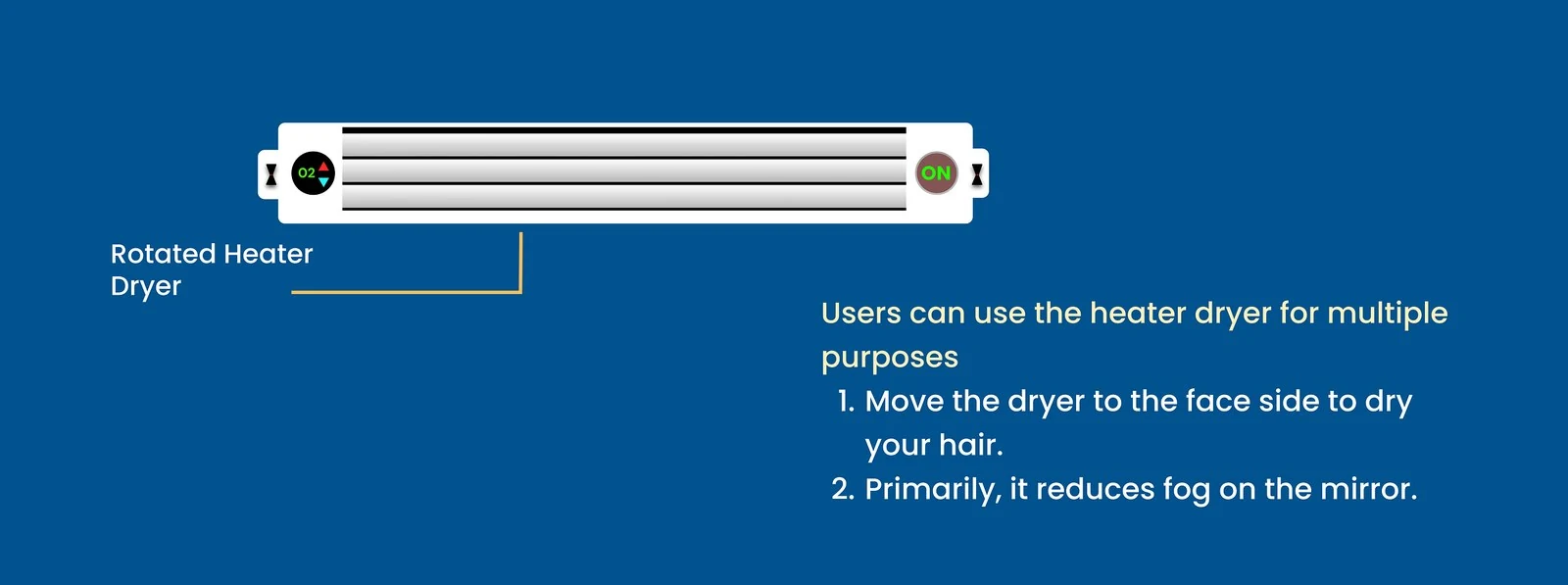
- Heater dryer. Blows warm air across the glass to clear the fog.
- On and off switch. Manual override, for when you want it off.
- Adjustment key. Slides the dryer down the mirror, and sets its speed.
- Temperature switch. Lets you set how warm it runs.
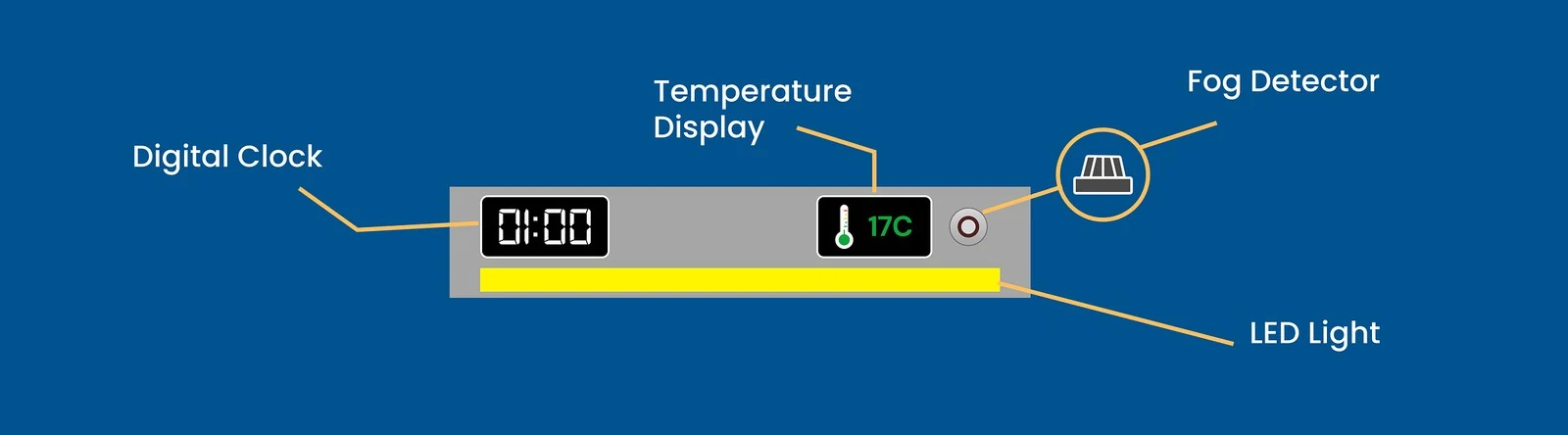
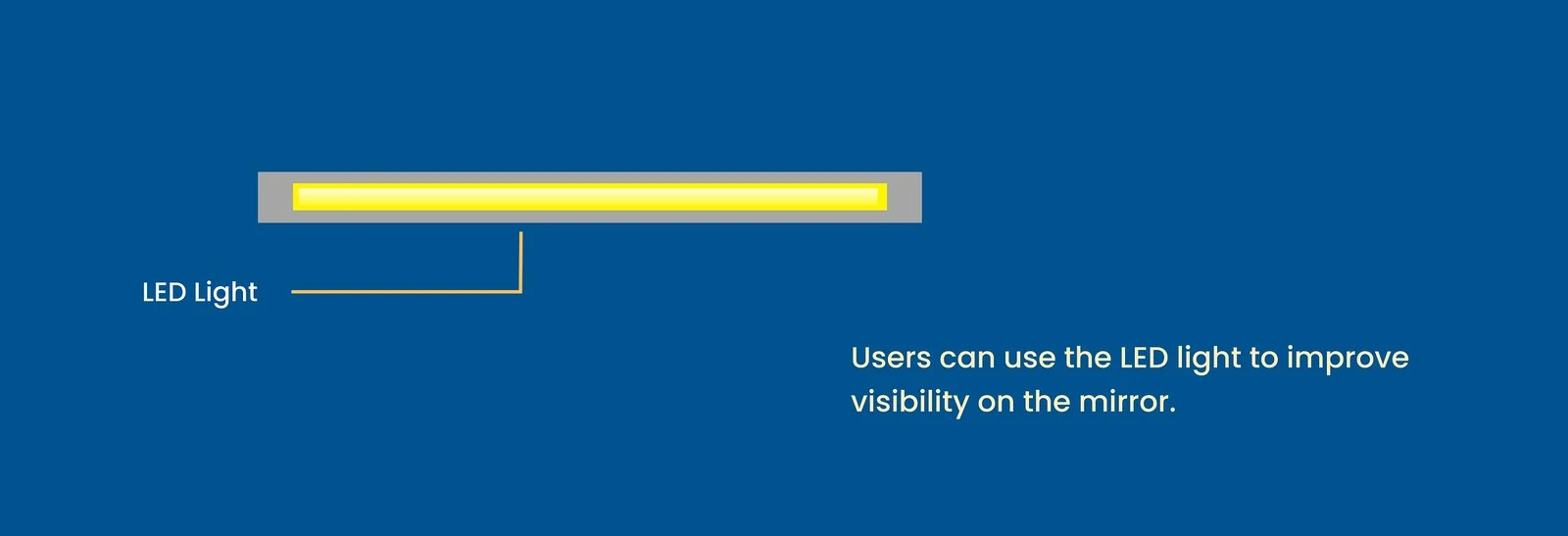
- LED light. Better visibility while grooming.
- Fog detector. The part everything depends on: it senses fog and starts the process.
- Temperature display. Shows what the mirror is running at.
- Digital clock. Useful precisely when you have no phone in your hand.
What I ruled out
Anti-fog spray or coating. Cheapest by far, and it wears off. A solution that needs reapplying every few weeks becomes another chore, which is the thing being removed.
An extractor fan. Treats the room rather than the mirror. It works, it is a building change rather than a product, and plenty of bathrooms cannot take one.
A heated pad behind the glass. Common in hotels and genuinely effective. It heats the whole mirror continuously, which means running power whether anyone is there or not, and it offers nothing else. The detector is what lets this one stay off until it is needed.
A manual button, covered above, which is the one I actually built before rejecting.
What already exists
Heated demister pads are a real product and they are sold today. This is not a new idea, and pretending otherwise would be dishonest.
What is different here is that they are always-on and passive. They have no sense of whether there is fog, no timer, no display, and no way to point the heat at the part of the mirror you are using. The opportunity was not the heating. It was making it responsive.
What I have not tested
This is a concept taken to a considered prototype, not a manufactured product. It has not been engineered, costed, or tested for electrical safety in a wet room, which is the part that would decide whether it is buildable at a sensible price.
I also tested with peers rather than with people in their own bathrooms, which is the honest limit of a self-directed study.
What I would do next
Humidity-based activation, so the mirror reacts to the room filling with steam rather than waiting for the glass to fog.
Smart home integration, so it can be set to run before you get in.
More efficient heating elements, because the current answer spends electricity to solve a small problem and that trade should be as cheap as possible.
What I took from it
Not every problem is worth solving, and choosing is part of the job. Picking one narrow problem and going deep on it beat trying to fix the whole bathroom.
Ask what people do, not what bothers them. That single change to the interview script produced the insight the whole product rests on.
Feedback is cheaper than being right. The button survived until someone else used it, and that was one conversation rather than one more month of drawing.