WhatsApp's search scrolls out of reach
In WhatsApp on Android the search bar scrolls away with the chat list, so reaching it means scrolling back to the top first. The app with the longest chat histories makes search the hardest to reach.
- Self-directed
- UX study, interaction design
- 21 May 2024
- 3 min
The app whose users have the most to scroll through is the one that makes them scroll back to search. In WhatsApp on Android, the search bar sits at the top of the chat list and leaves with it. Fifty chats down, finding one person means scrolling all the way back up first.
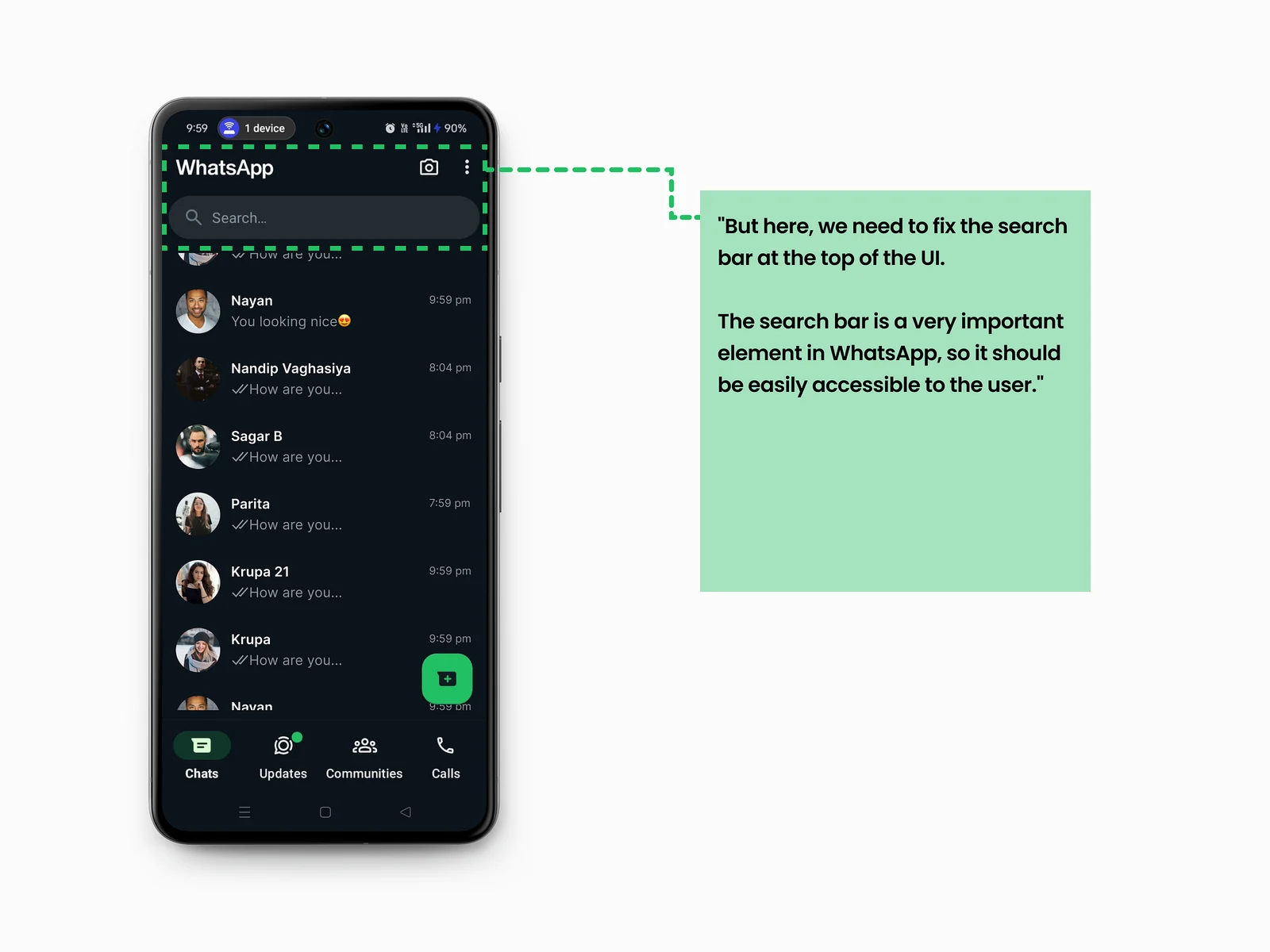
Search is part of the list, so it scrolls away
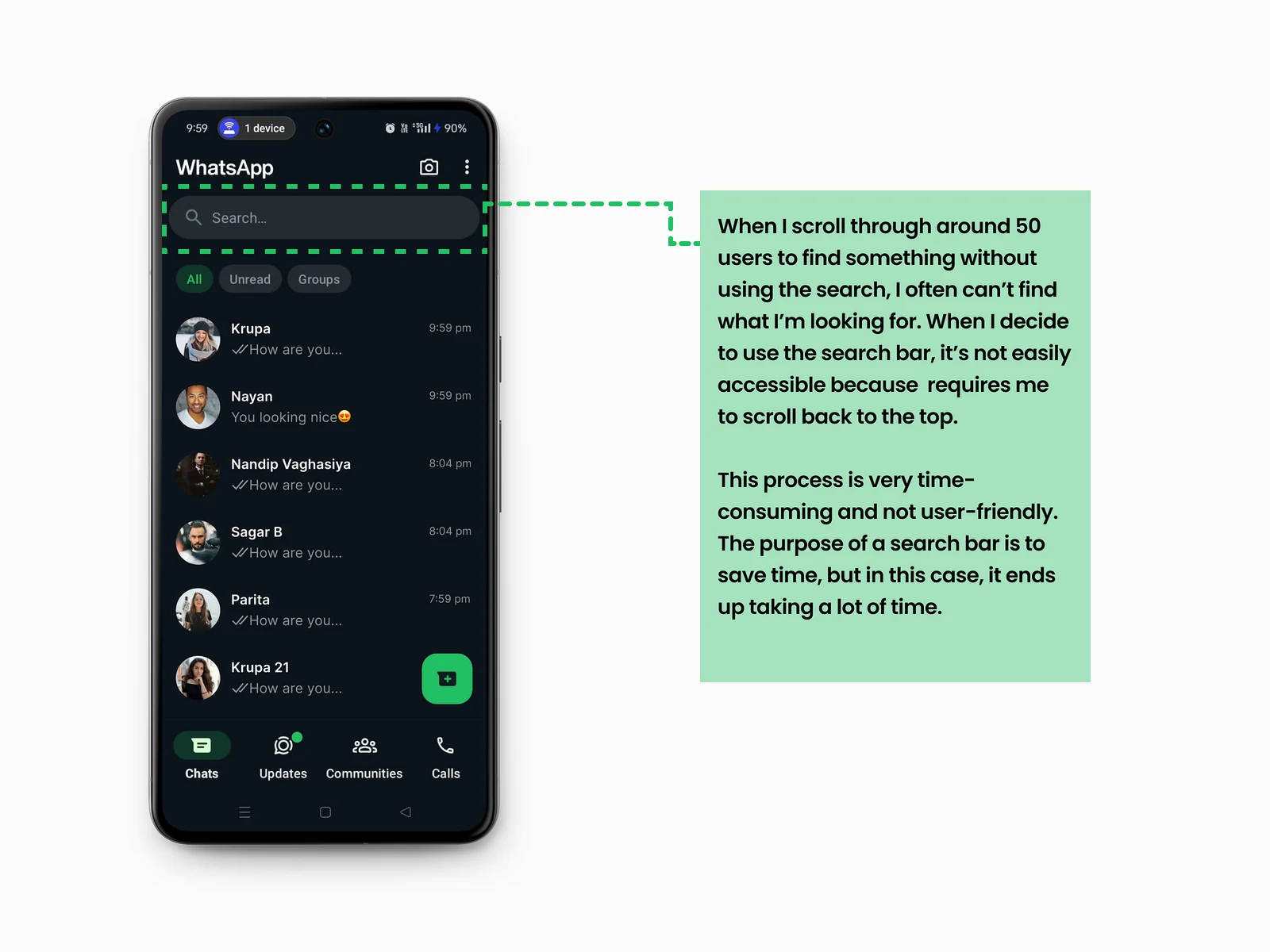
At the top of the list, search is right there. It is part of the list rather than the header, so the first scroll takes it away.
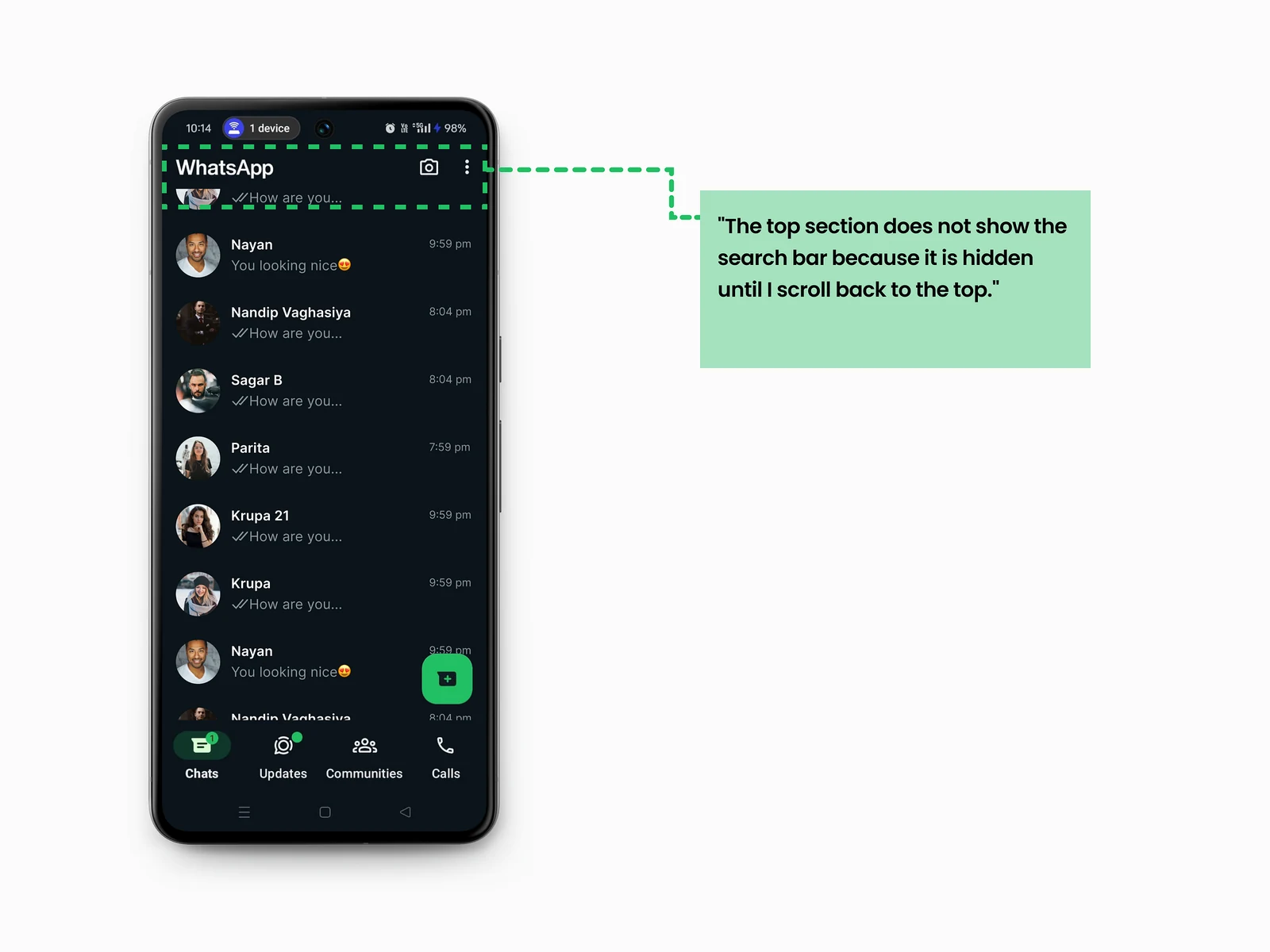
After that, the header holds only the title and the camera. The one control that would end the scrolling is the one you have to scroll to reach.
The fix: pin it under the header
Keep the search bar fixed under the header, so the chat list scrolls beneath it and search is never more than a tap away, however far down you are.
What else I considered
A floating search button. Always reachable, and it hides what it does behind an icon. It also covers the list it floats over, which is the thing you are trying to read.
Pull down to search. Elegant, and invisible. Nobody discovers a gesture that has no affordance, and the people struggling most here are the least likely to go looking for one.
Search in the bottom navigation. Reachable with a thumb, and it would compete with Chats, Updates and Calls, which are destinations. Search is not a destination, it is a way of filtering the one you are already on.
The cost of the fix. A pinned bar costs one row of vertical height, which is roughly one chat row on a typical phone. That is the trade: one row of list, in exchange for search never being more than a tap away.
What the other apps do
Telegram keeps a search control in the header at all times. Signal does the same. Both treat search as part of the chrome rather than part of the list.
WhatsApp is the outlier, and it is the one with the largest user base and therefore the longest chat histories.
How I would test it
Not with an opinion survey. Give people a phone with a few hundred chats on it, ask them to find one specific conversation, and time it. Run it against both versions. The number that matters is time to find, and whether people use search at all when it is visible, because my argument is that they currently do not because they forget it is there.
What this study is, and is not
This is a proposal from the outside. I have no access to WhatsApp's usage data, no idea how often search is actually used, and no way to know what they have already tested and rejected.
What it does show is a specific, checkable claim: the app with the longest chat histories is the one that makes search hardest to reach, and two of its closest competitors do not. That is worth writing down even without their data, and it is the limit of what one person can honestly conclude from the outside.